Lauderhill, FL
Certification · 10.5 FL CEUs
Elegant training studio with kettlebells and plants in warm golden light

Our Story

More Than a Training Method.

Physiotraining™ was created from a simple observation: There is often a gap between recovering from an injury and truly returning to life.

A person may successfully complete physical or occupational rehabilitation. Pain may have improved. Range of motion may have increased. Basic functional goals may have been achieved. Then comes discharge. But discharge does not always mean that person is ready to return to everything that matters to them.

Returning to the gym is different from walking safely through a clinic. Returning to competitive sports is different from completing therapeutic exercise.

Lifting a grandchild, running on the beach, practicing martial arts, traveling, gardening, working a physically demanding job, or simply maintaining strength and independence with age can require physical abilities well beyond the initial goals of rehabilitation.

Physiotraining™ was created to help bridge that gap.
The Origin

Two worlds traditionally treated as separate.

Physiotraining™ grew from the intersection of two worlds that are traditionally treated as separate: rehabilitation and physical performance. Its creator, Cristiane Barbosa-Timoteo, spent decades working in rehabilitation while simultaneously training, teaching and participating in fitness, strength training and martial arts.

?

How do I get stronger now?

?

How do I return to training?

?

How do I keep this injury from happening again?

?

How do I modify exercise around an old injury?

?

How do I know when to progress?

?

How do I get from rehabilitation back to my sport—or simply back to the life I had before?

The answers did not fit neatly into one professional box. Traditional rehabilitation had a defined role. Traditional personal training had another. But between those two worlds was an enormous population of people who were no longer necessarily patients, yet were not always prepared for unrestricted exercise. That became the space where Physiotraining™ began.

Why It Was Created

People needed a better transition.

Physiotraining™ was not created because the world needed another workout program. It was created because people needed a better transition.

That person carries a history. Perhaps there was surgery. Perhaps there is an old injury. Perhaps certain movements remain limited. Perhaps strength has returned but endurance has not. Perhaps the person is physically capable but has lost confidence. Or perhaps the person has recovered remarkably well and is now ready to progress far beyond what was required during rehabilitation.

Physiotraining™ recognizes that history without allowing that history to permanently define the person's future.

From Patient to Participant

From

"What is wrong with me?"

Toward

"What can my body learn to do next?"

The goal is not to keep someone dependent upon a professional indefinitely. The goal is to educate, progress and empower the individual to become an active participant in maintaining strength, mobility, fitness and physical capability.

The Question

Too often, people complete rehabilitation and are left asking one important question: What do I do now?

They may be medically cleared or discharged from skilled rehabilitation, but that does not necessarily mean they feel ready to return to unrestricted exercise, sports, demanding physical activity, or the lifestyle they had before an injury. At the same time, traditional fitness programs are not always designed to understand the history, movement limitations, previous injuries, precautions, or physical challenges of the person standing in front of them. Physiotraining™ was created for that space in between—and for everything that can come after it.

Our approach combines principles drawn from rehabilitation, exercise science, functional training, strength and conditioning, injury prevention, movement education, and more than two decades of hands-on experience working with individuals ranging from everyday adults to high-level athletes.

The objective is not simply to exercise. The objective is to move better, become stronger, understand your body, reduce the risk of re-injury, and build the physical capacity needed for the life you want to live.

The Physiotraining Continuum

Recovery should not be the finish line. It should be the foundation for what comes next.

Physiotraining™ recognizes that the needs of the human body change throughout recovery, training, aging, sport, and life. Exercise should progress with those needs.

A person may begin with restoring movement and confidence after rehabilitation. Later, the focus may become mobility, balance, strength, endurance, body composition, recreational activity or returning to a sport. Eventually, the goal may simply be maintaining the ability to move independently, train confidently, and remain physically capable for decades.

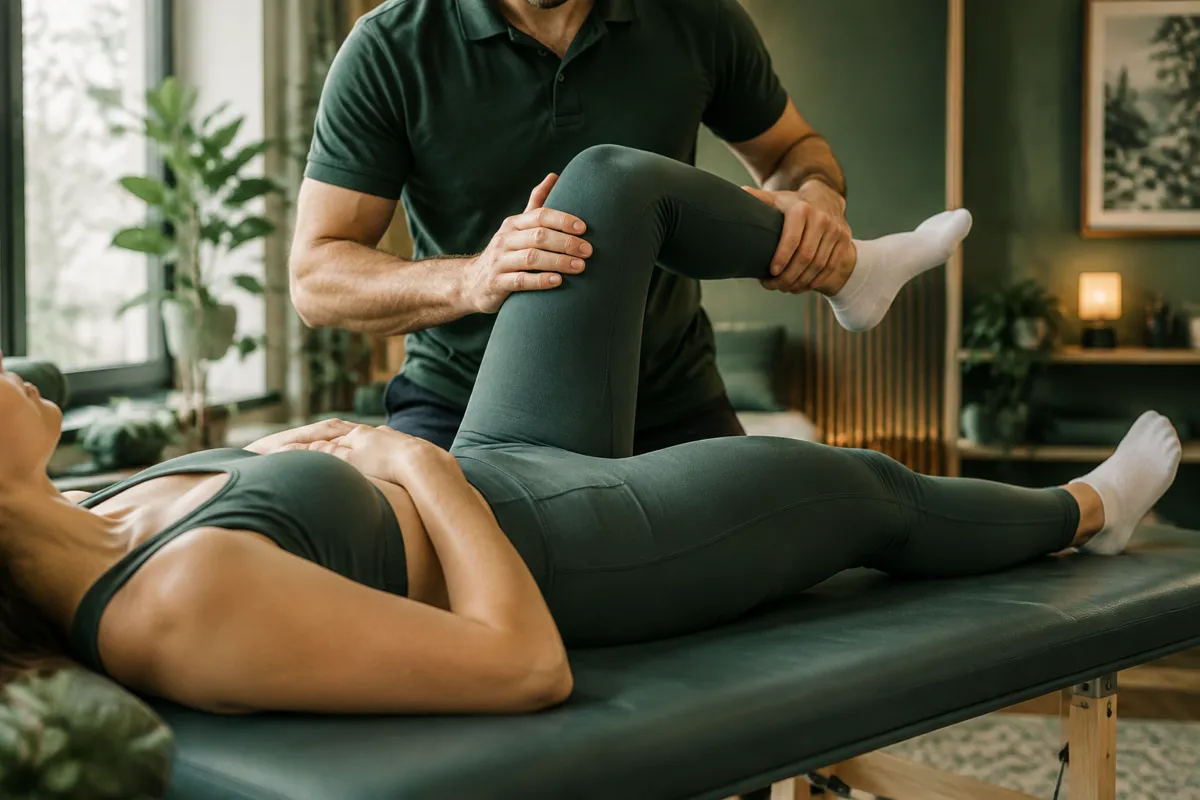
Clinician assisting a patient with a gentle leg exercise on a treatment table during rehabilitation

Stage 1 · Rehabilitation

The individual receives skilled healthcare intervention when injury, surgery, illness, pain or functional impairment requires clinical care.

The goal of Physiotraining™ is progression—not dependency. We want people to understand their bodies and develop the tools to continue improving them.

Where someone enters this continuum is less important than continuing to move forward appropriately.

The Problem

There has historically been a gap between healthcare and fitness.

Rehabilitation professionals are trained to help individuals recover function following injury, surgery, illness, pain, or physical impairment. Fitness professionals help people develop strength, conditioning and physical performance.

But what happens to the individual who is no longer appropriate for skilled rehabilitation yet still needs knowledgeable guidance before—or while—returning to unrestricted fitness?

That question became one of the foundations of Physiotraining™. The system was developed to create a more intelligent transition from:

01Recovery to capability.
02Capability to strength.
03Strength to performance.
04Performance to lifelong movement.

Our Mission

Improve quality of life through intelligent movement.

The mission of Physiotraining™ is to improve quality of life through intelligent movement, progressive exercise, education and the development of lifelong physical capability.

We aim to help individuals understand that physical improvement does not necessarily end when rehabilitation ends, when an injury occurs, when athletic competition stops, or when a certain age is reached. We also aim to educate professionals so they can make better decisions when working with individuals transitioning from rehabilitation into wellness, fitness and higher-level activity.

  • More knowledgeable professionals.
  • More capable individuals.
  • Safer exercise decisions.
  • Stronger bodies.
  • Greater independence.
  • And better quality of life.

The Philosophy

Five principles behind every decision.

There is no single exercise program that is appropriate for everyone.

The better question is: "Is this the appropriate exercise for this individual, at this point in his or her progression, for this particular goal?"

More difficult does not automatically mean better. Sometimes the smartest decision is temporarily making an exercise easier so that it can be performed correctly.

The goal is not simply to make exercise harder. The goal is to make the individual more capable.

Strength is not reserved for bodybuilders or athletes. It is one of the foundations of human function.

For an athlete, strength can contribute to performance. For an older adult, strength may contribute to independence. For someone returning from an injury, strength may restore confidence. The application changes. The importance does not.

Completing an exercise is not necessarily the same as performing it well. Before asking the body to repeatedly produce more force, speed or endurance, we should understand how that body is accomplishing the task.

A squat may contribute to getting out of a chair. A step-up may contribute to climbing stairs. Physiotraining™ continually asks: What are we preparing this person to do?

Prehabilitation

Don't Only React to Injury.

Injury prevention can never mean guaranteeing that someone will never become injured. Human bodies, sports and life are not completely predictable. But we can prepare the body.

  • Improve strength
  • Address mobility
  • Develop balance and coordination
  • Improve conditioning
  • Teach better movement strategies
The best rehabilitation is sometimes the rehabilitation you never need.
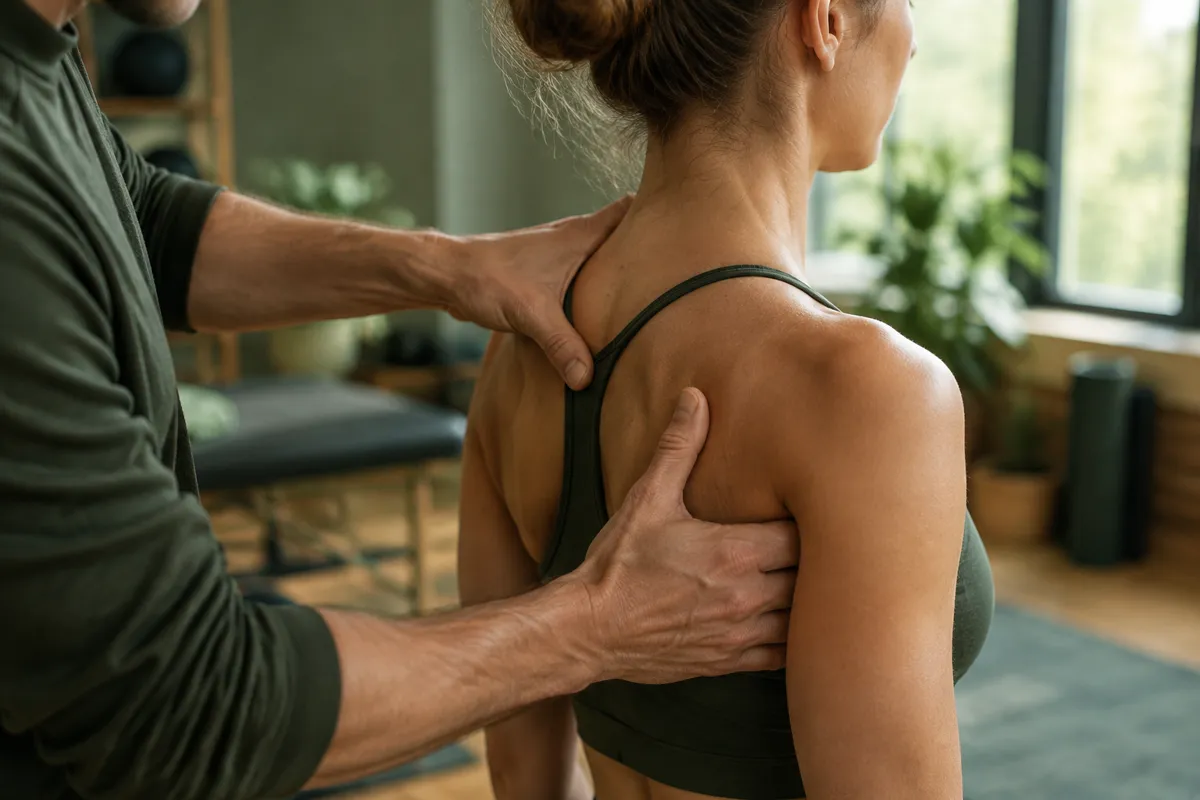
Coach's hands gently adjusting a client's shoulder posture

Rehabilitation Knowledge + Fitness + Performance

Four bodies of knowledge, one approach.

01

Clinical Rehabilitation

Anatomy, pathology, functional limitations, precautions, recovery and therapeutic exercise.

02

Fitness

Progressive resistance, conditioning and long-term development.

03

Athletics

Understanding performance demands.

04

Martial Arts

Unpredictable movement, leverage, reaction, balance, coordination, mobility, endurance, power and performing under pressure.

The Martial Arts Influence

Not simply pain-free.

These individuals did not simply want to become pain-free. They wanted to return to environments that demanded tremendous mobility, strength, balance, endurance, coordination and physical resilience.

Martial arts belts folded on a tatami mat
The final goal determines the level of preparation required. A person should not be trained only for where they are today. Whenever appropriate, they should also be prepared for where they intend to go.

Education Is Part of Physiotraining™

The professional curriculum.

  • Client data collection
  • Communication and education
  • Recognition of situations requiring referral back to a healthcare provider
  • Functional mobility
  • Posture and postural control
  • Core stabilization
  • Dynamic balance
  • Conditioning
  • Movement efficiency
  • Resistance exercise
  • Exercise progression and regression
  • Considerations for individuals following rehabilitation
Knowing hundreds of exercises is less valuable than understanding why, when and for whom to use them.

From a Method to a System

It is built around progression.

Physiotraining™ is not built around one sport, one diagnosis or one age group. It is built around progression.

  • A methodology.
  • A professional education program.
  • A certification pathway.
  • A book and educational resource.
  • A community of professionals.
  • A framework for post-rehabilitation fitness.
  • A philosophy about prevention and lifelong movement.

What It Is — and What It Is Not

Physiotraining™ respects the boundaries between healthcare and fitness. It is not intended to replace physical therapy, occupational therapy, medical care or other skilled healthcare services when those services are indicated. An individual requiring evaluation, diagnosis or skilled rehabilitation should receive appropriate care from the qualified healthcare professional.

Physiotraining™ does not replace rehabilitation. It helps answer the question of what can come next.

Our Vision

We envision a future in which fewer people feel lost after rehabilitation. Where fitness professionals are better prepared to recognize complexity. Where rehabilitation professionals see wellness and prevention as part of a larger continuum. Where athletes learn to care for their bodies before injury forces them to. And where aging is viewed not simply as inevitable physical decline, but as another stage of life in which strength, movement and independence should continue to be developed and protected.

More Than a Workout

Physiotraining™ is not built around random exercises. It is built around the person performing them.

●Previous injuries and rehabilitation history
●Current functional abilities
●Mobility and flexibility
●Strength and muscular endurance
●Balance and postural control
●Movement quality
●Exercise tolerance
●Individual goals
●Lifestyle demands
●Sport or recreational demands
●Appropriate exercise progression and regression

An exercise that is appropriate for one person may be completely inappropriate for another. The ability to select, modify, progress and regress exercise appropriately is central to the Physiotraining™ philosophy.

From Clients to Athletes

Performance is personal.

Physiotraining™ has been used over the years by individuals with very different goals—from people recovering from significant injuries to rehabilitation professionals and competitive martial artists. Our history includes individuals who returned to the gym after prolonged back problems, athletes who returned to Brazilian Jiu-Jitsu and mixed martial arts following injury and surgery, and rehabilitation professionals who incorporated concepts learned through Physiotraining™ into their own approach to wellness and exercise. But success is not defined only by returning to competition.

For one person, success may mean returning to the mat. For another, it may mean confidently walking, exercising, traveling, lifting a grandchild or simply trusting their body again. Performance is personal.
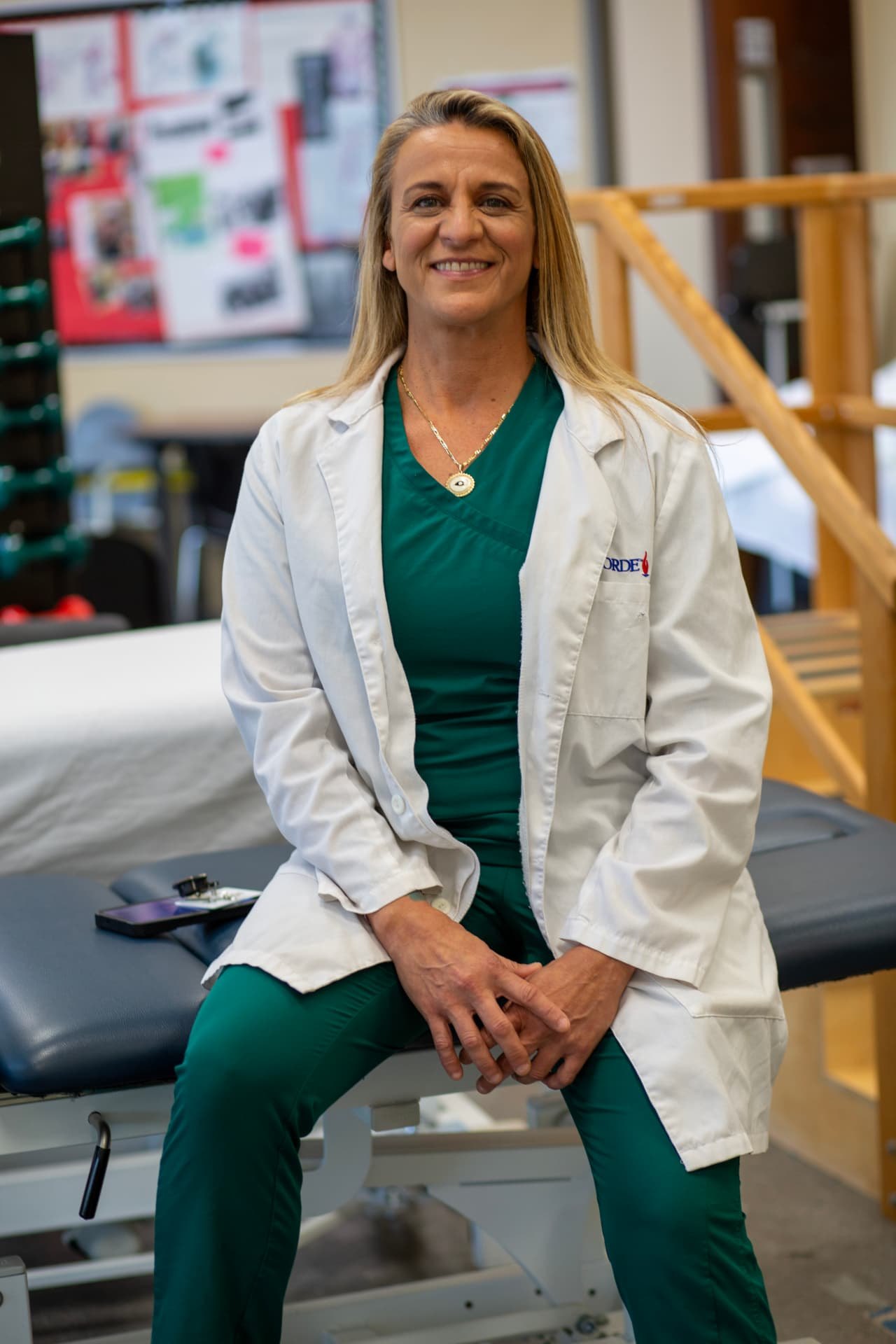
Cristiane Barbosa-Timoteo, founder of Physiotraining™

Meet the Creator

Cristiane Barbosa-Timoteo

Licensed PTA • Director of Clinical Education • Author • Brazilian Jiu-Jitsu Black Belt

Physiotraining™ was created by Cristiane Barbosa-Timoteo, a Physical Therapist Assistant, rehabilitation professional, educator, Director of Clinical Education, continuing-education provider, author, fitness professional and lifelong martial artist. Her perspective was shaped by more than 25 years working in health and rehabilitation while simultaneously training and teaching in physically demanding disciplines.

Her background includes Brazilian Jiu-Jitsu, Capoeira, Muay Thai, strength and conditioning, rehabilitation, clinical education and the education of future Physical Therapist Assistants. That combination gave her an unusual vantage point.

She understood what it meant to rehabilitate the body. She also understood what it meant to demand more from it afterward. Physiotraining™ grew from bringing those worlds together.

Today, her work extends beyond treating and training individuals. Through professional education, mentorship and Physiotraining™, her objective is to help other professionals make safer, more informed decisions about exercise and to help individuals continue progressing long after rehabilitation ends.

25+
Years
150K+
Views
5K+
Shares

Standout anatomy videos have reportedly reached 150K+ views and 5K+ shares.

@crisbarbosatimoteo

The Physiotraining™ Belief

We believe rehabilitation can be a beginning rather than an ending.

We believe people should understand their bodies rather than fear movement.

We believe exercise should be selected with purpose.

We believe progression should be intelligent.

We believe strength matters throughout the lifespan.

We believe prevention deserves as much attention as recovery.

We believe healthcare and fitness can learn from one another while respecting their professional boundaries.

We believe athletes should be prepared for the demands of their sport.

We believe older adults should continue being challenged—not simply protected from challenge.

We believe knowledge creates confidence.

And above all: We believe it is never too late to improve your quality of life.

— C.B. Timoteo, Founder of Physiotraining™